AI is reshaping every career. Girls are still being quietly talked out of it.
The gap isn't ability. It's what happens between 5th and 9th grade. AI School for Girls was built to work inside that exact window.
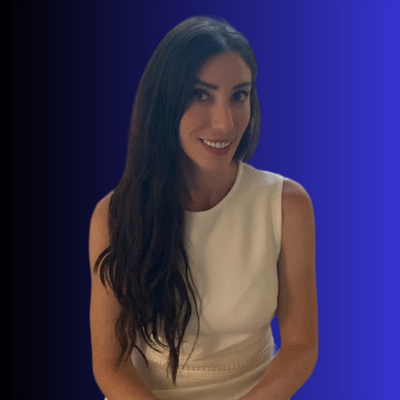
Mira Wattar
Founder · Ex-VP Global Marketing, EchoNous · Ex-Fujitsu · Ex-Hyundai
VP of Global Marketing at EchoNous, an AI medical-device company — 15,250+ physician leads and 650 qualified sales appointments generated
Marketing leadership at Fujitsu Frontech North America and Hyundai Technology
Founder of Wattar Digital · Advisor at Loyal VC · Founder Institute mentor and speaker
Washington D.C. → Dubai → NYC → California — and now building the school she wishes had existed
Not a gap in the market. A gap I couldn't stop thinking about.
My career took me from Fujitsu and Hyundai to VP of Global Marketing at EchoNous, an AI medical-device company, where my team's AI-powered demand systems generated over 15,000 physician leads. I later founded Wattar Digital, advise at Loyal VC, and mentor founders through the Founder Institute. In other words: I've spent years watching, from the inside, how completely AI is rewiring every industry it touches. For a long time I thought of that as my job. Then it stopped feeling like just a job.
AI is no longer a specialist's tool. It's the operating layer of almost every career that's going to matter in the next decade: medicine, law, education, design, engineering, finance. The people who understand it will have leverage. The people who don't will work for the people who do.
The research on this is unambiguous. Girls' interest in STEM peaks around age 11 and falls through high school — not because they get worse at it, but because confidence, role models, and the sense of "this is for someone like me" all erode during exactly these years. Meanwhile, boys in the same classrooms are internalizing the opposite message.
Free programs like Girls Who Code and Kode With Klossy prove the demand is real — and they're genuinely good. But they're short. A two-week camp or a volunteer-led club is a spark. What keeps girls in is belonging: a consistent group, a consistent teacher, female role models showing up regularly, and a year-long arc of projects that accumulates into something she's proud of.
That program didn't exist. So I built it.
AI School for Girls is not a side project or a hobby. It's the thing I decided to build when I couldn't find a good reason not to, given everything I know about AI, about marketing, and about what keeps girls in rooms where they're told they don't belong.
Get girls through the confidence window with their identity as builders intact.
Not "introduce girls to tech." Not "make coding accessible." Those are table stakes. Our goal is specific: by the time a girl finishes a year with us, she knows she can build with AI, knows why she belongs in any room where AI is being discussed, and has a project portfolio that proves it to everyone else.
Confidence, not just competence
Skills matter. But the research is clear: what keeps girls in tech is identity. Believing "this is for me" is the output we optimize for.
Women as the visible norm
Girls need to see women doing real AI work — not as exceptions or guest stars, but as the regular teaching and mentoring presence in the room.
Depth over breadth
Thirty-six weeks of the same cohort, building on each other's work, is worth more than three years of one-off classes. We choose continuity.
The things we won't compromise on.
Safety is non-negotiable, not aspirational
Background-checked instructors, recorded sessions, no student DMs, parent-owned accounts, COPPA-aligned from day one. These aren't features — they're the floor. If we can't operate safely, we don't operate.
Honest about what we are and aren't
We're a new school, not a decade-old institution. We'll tell you what we know, what we're figuring out, and what we'll do if something doesn't work. That includes canceling anytime with no friction.
The girl's experience is the product
Not the curriculum deck, not the guest lineup. If girls aren't excited to show up each week, something is wrong and we fix it. Retention is the proof of the product, not the marketing.
Free programs are allies, not competitors
Girls Who Code, Kode With Klossy, Black Girls Code — we celebrate them. Parents who can't afford our program should know about them. We exist to serve the families for whom the paid, year-long, live model is the right fit.
Questions about who we are
Is this just one person?
At launch, yes. Mira is the founder and operates the school. Instructors are contracted per cohort — qualified, background-checked teachers with relevant AI/tech backgrounds, not generalist tutors. The model scales cohort by cohort, and instructor quality is the thing we'll protect most aggressively as we grow.
Are you accredited?
No. We're an independent enrichment program, not a school district or accredited institution. The credential we're building toward is a student project portfolio and a letter of program completion — things that speak for themselves in college applications and future internship conversations. Accreditation takes years and primarily serves a formal school context that doesn't map to what we do.
What if the program closes?
We operate monthly billing with no lock-in for exactly this reason. If something prevents us from running, you owe nothing. All student project files are owned by the student and can be exported anytime. We won't hold anything hostage to a subscription.
How do you handle scholarships?
One scholarship seat per cohort at founding. Applied for directly. We don't publicize scholarship recipients — it's not about optics, it's about the girl in the room. As revenue grows, we'll formalize the scholarship program and increase capacity.
Will Mira teach?
In the founding cohorts, yes — directly or in close partnership with the instructor. As cohorts scale, Mira transitions to curriculum design, guest curation, and quality oversight. Every instructor is vetted by Mira personally before meeting a cohort.
The next step
A free workshop tells you everything you need to know.
Seventy-five minutes. She builds something real. You watch. Then you decide.
Save Her Free Seat